See how it works
Real example: same person, before and after.
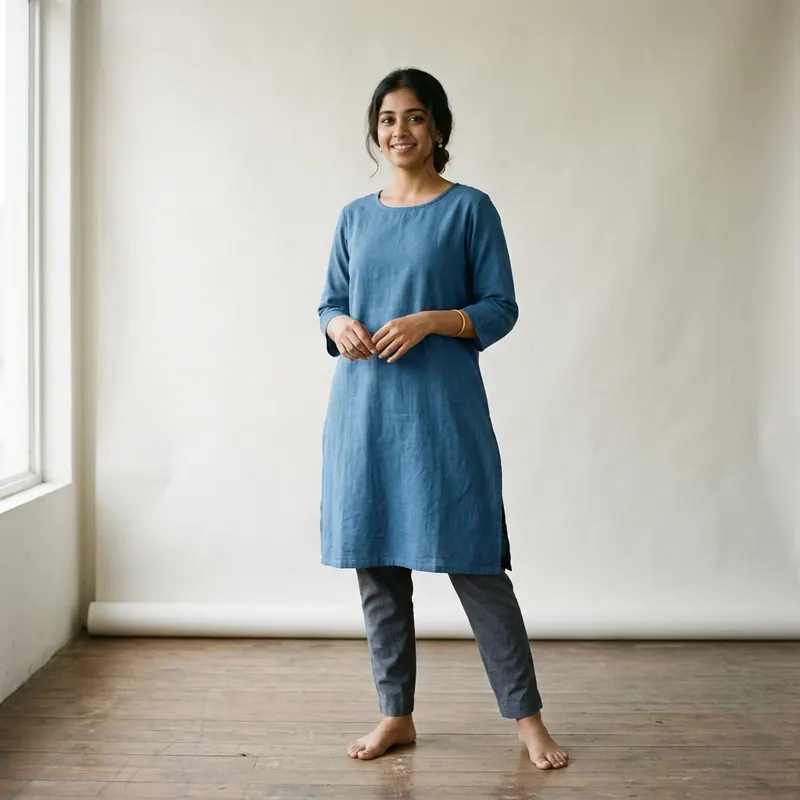
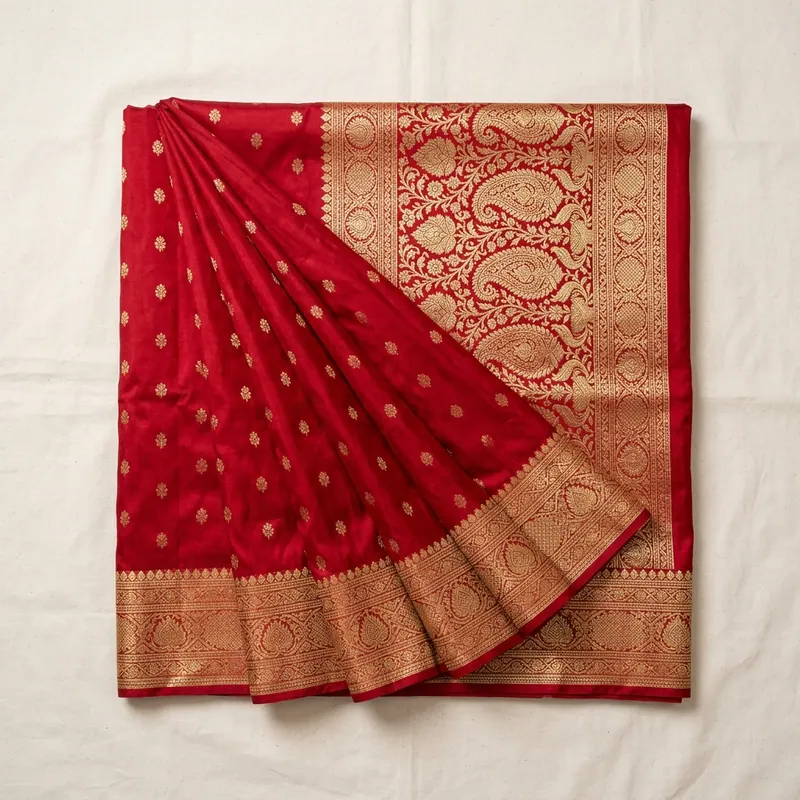
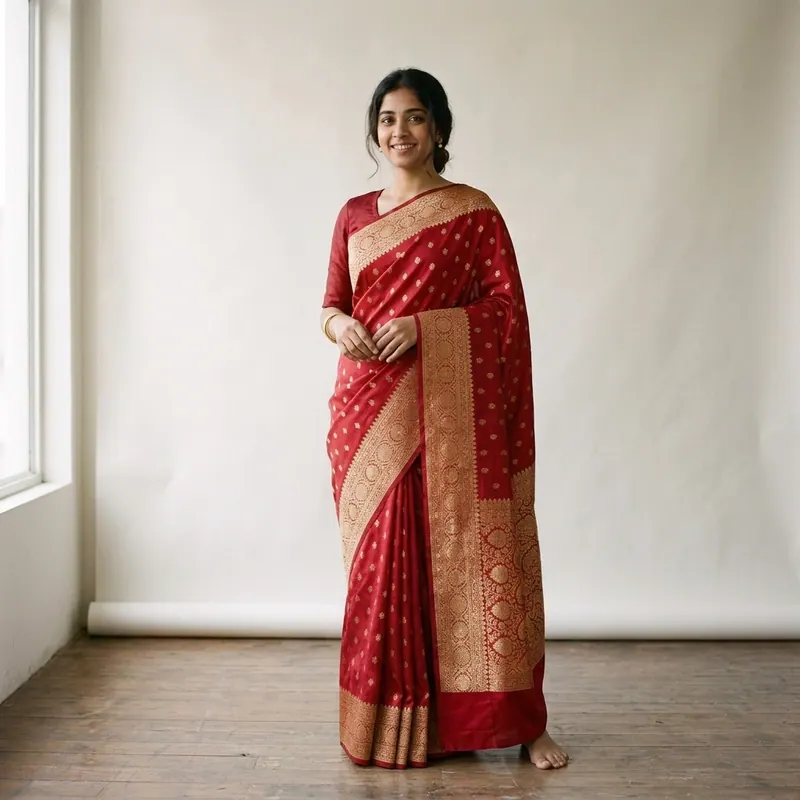
Virtual Saree
Try-On.
Banarasi, Kanjivaram, lehenga, sherwani, salwar-kameez, dhoti — see every weave, every drape on your real face before the tailor cuts. Stop guessing the pallu.
A Banarasi on a stock model isn't a Banarasi on you.
Your real complexion
Indian skin has range — wheatish, dusky, fair, deep. A magenta Kanjivaram that pops on one undertone can flatten on another. See it on YOUR face first.
Shaadi, Diwali, Karwa Chauth
Plan the bridal red, the sangeet sharara, the mehendi yellow and the Karwa Chauth saree months ahead — on you, not on the designer's muse.
Sabyasachi without the trial
See yourself in a Sabyasachi-style lehenga or a Manish Malhotra anarkali before flying to Mumbai for the trial. Decide what's worth the queue.
Photo → saree → on you.
Upload your photo
Face and shoulders for sarees, full body for lehenga or sherwani. A phone snap in daylight is enough.
Drop in the saree or lehenga
Any image — Aza, Pernia's, Manyavar, Fabindia, Etsy, an Instagram designer screenshot.
30-second render
AI maps the weave, zari and drape onto you, keeping complexion and lighting intact.
Every Indian-wear piece before it ships.
What brides and shaadi shoppers ask.
Tip for the best saree render: the pleat count and pallu fall depend on your real measurements. Before you upload, take 30 seconds to read how to get accurate body measurements for virtual try-on — it makes the difference between a saree that drapes correctly and one that floats. The same guide is what brides use before their first Sabyasachi consultation.
Beautiful on the mannequin.
More you on you.
One photo. Any saree. 30 seconds. The weave and pallu that actually flatter.
Try a Saree Free